

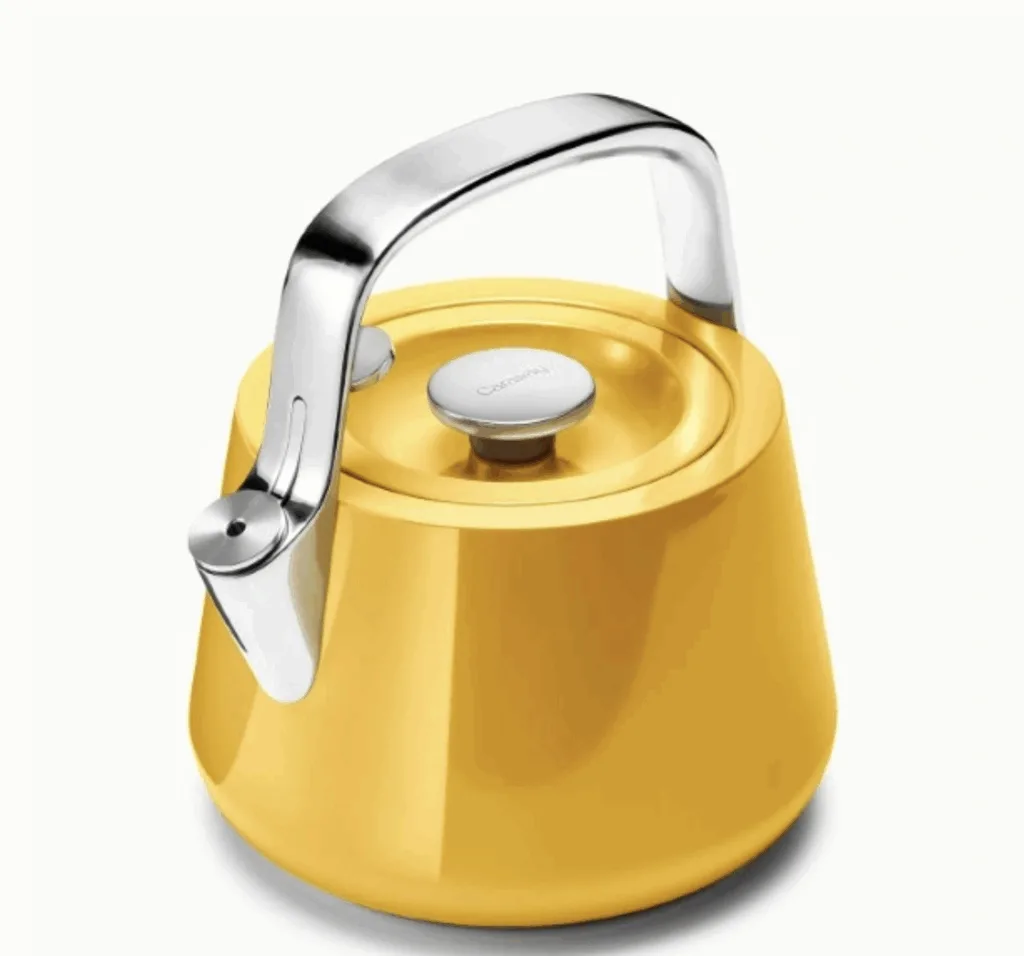
Many people are surprised to learn that certain tea kettles, particularly older models, can pose a poisoning risk. The primary materials of concern are plastic, copper, ceramic glazes, nickel, and aluminum. The safest non-toxic tea kettles are free of lead, cadmium, PFAs, PFOA, PTFE, hard adoration, and non-stick coatings. So how do you know if your tea kettle is safe? Let’s break it down.
How Do Tea Kettles Leach Chemicals?
Tea kettles can leach chemicals from materials such as plastic, stainless steel, and other metals, with high heat accelerating the process. Poorly maintained kettles can also develop limescale, a mineral buildup that can cause digestive issues. One sign of chemical leaching is an off-taste or odor in the water. Also, look for cracks, chips, or worn-away coatings, which can be entry points for chemicals to be released.
Tea Kettles To Be Cautious Of
Plastic:
Old or low-quality plastic tea kettles can leach chemicals like BPA. BPA has the potential to act as an endocrine disruptor and potentially affect reproductive organs.
Ceramic:
Be wary of cheap ceramic kettles, especially those with brightly colored or damaged glazes, as they can contain lead. Lead poisoning harms multiple body systems, especially the brain and nervous system.
Brightly Colored Enamel:
Tea kettles with brightly colored enamel, both inside and out, should be avoided.
Non-Stick Coatings:
Everyone should avoid tea kettle with ANY TYPE of non-stick coating.
Always remember, when you boil water, if chemicals are present, they seep into your water more quickly.
Safest Non-toxic Tea Kettles
To thoroughly search for a safe, non-toxic tea kettle, I prioritized materials like stainless steel, avoided aluminum, and steered clear of cast iron. I also checked for certifications, and ensured handle and lid materials were also free of harmful chemicals. The only brands I considered are known for their quality materials and safety standards. And the winners are.
My number one pick for the safest non-toxic tea kettle is the Caraway Whistling Tea Kettle. The coating for this kettle is free of PFAS, PFOA, PTFE, and Hard Anodization (which are other dangerous chemicals). It has a nice, clean design, feels sturdy, and has a great whistle. Caraway is known for its high quality materials and safety standards across everything it manufactures. I also highly recommend all of their non-toxic cookware. Caraway is offering the Ordinary Vegan community 10% off all Caraway products. Use coupon code Ordinary10 at checkout.
If you prefer an electric tea kettle, I recommend the 1.5 L BPA-Free Electric Kettle Stainless Steel with Auto Shut-Off. Made from surgical-grade 18/8 stainless steel, it is durable, heats well, and won’t leach harmful metals like nickel or aluminum into the water.
Taking Care Of Your New Non-Toxic Tea Kettle
Check your care instructions. Wash it daily with mild dish soap and a soft sponge, and then rinse and dry it thoroughly. If using a dishwasher, make sure your kettle is dishwasher safe. If your kettle has cork, plastic, or wooden accessories, these are not dishwasher safe. Never use abrasive scrubbers or steel wool on your tea kettle, as this can cause scratches. Descale for hard water. Suppose you notice a chalky residue inside the kettle, which indicates mineral buildup from hard water. You can clean it by filling the kettle with a solution of equal parts white vinegar and water. Bring the solution to a boil, then reduce the heat and let it simmer for about 10 minutes. Pour out the solution and rinse the kettle thoroughly with clean water.
Last but not least, do not let water sit in the kettle for long periods after use. Ensure the kettle is completely dry before storing it to prevent rust or discoloration.

Leave a Reply